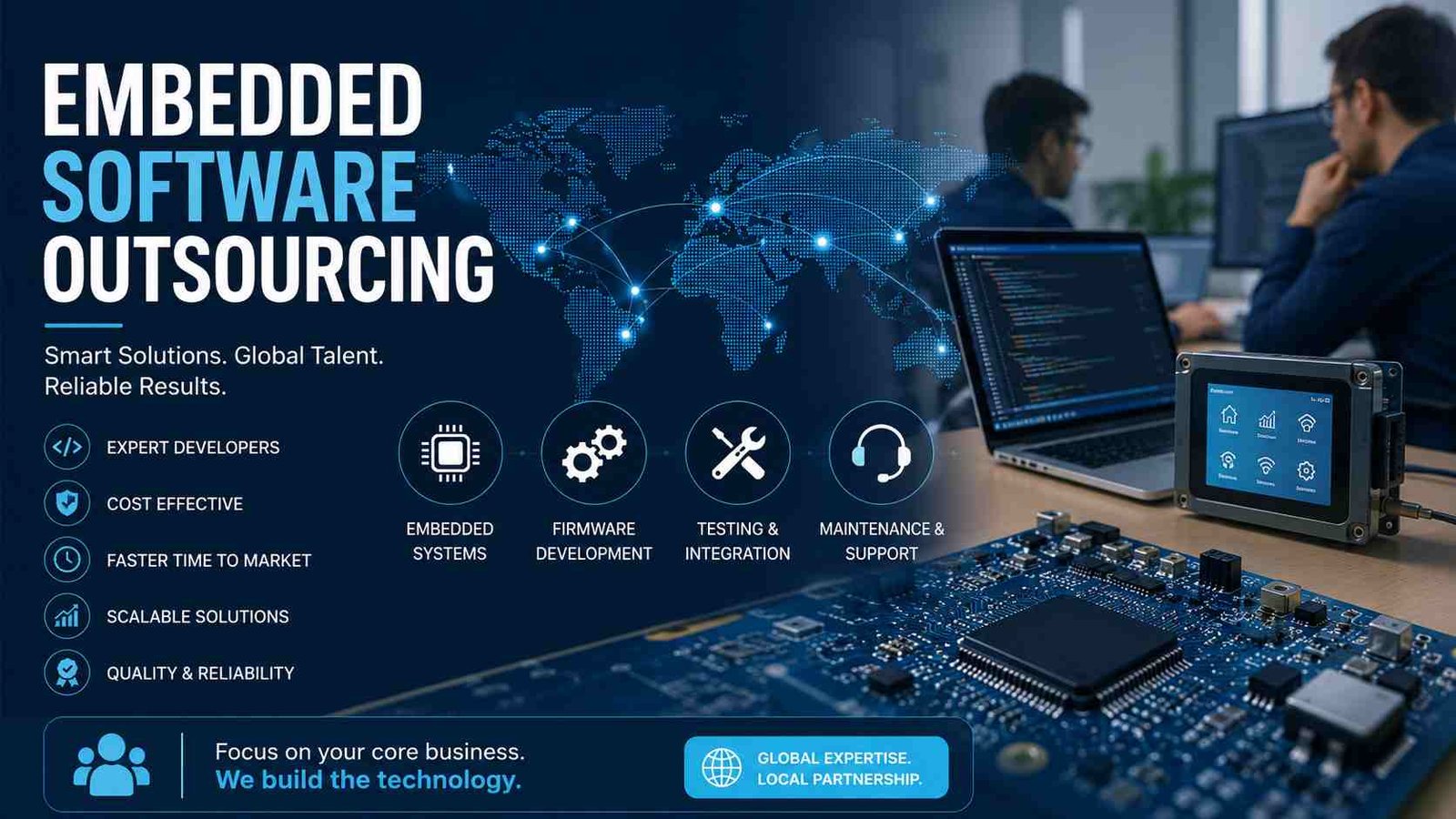
Modern products are becoming smarter, more connected, and more dependent on software. From medical devices and automotive systems to industrial machines, IoT sensors, wearables, and smart appliances, embedded software controls many of the functions users rely on every day. Developing this software, however, requires specialized knowledge of hardware, firmware, operating systems, communication protocols, testing, and security.
Embedded Software Outsourcing allows businesses to work with external engineering teams instead of handling every stage of development internally. This approach can provide access to experienced developers, reduce recruitment pressure, speed up product development, and make it easier to scale a technical team when needed. The right partner can also bring experience with specific processors, microcontrollers, RTOS platforms, embedded Linux, drivers, and testing tools.
But outsourcing is not simply a matter of hiring the lowest-cost development team. Embedded projects have close links between hardware and software, so technical experience, communication, quality assurance, security, and long-term support all matter. This guide explains how Embedded Software Outsourcing works, what can be outsourced, its benefits and challenges, expected costs, and how to choose a reliable development partner.
What Is Embedded Software Outsourcing?
Embedded Software Outsourcing means hiring an external software development company or engineering team to design, develop, test, maintain, or improve software that runs inside a physical device. Unlike ordinary business software, embedded software works closely with hardware and often has strict requirements for memory, processing power, timing, energy consumption, reliability, and security.
An outsourcing partner may handle an entire embedded project or only a specific part of it. For example, a company may outsource firmware development while keeping system architecture in-house. Another business may need external specialists for device drivers, embedded Linux, RTOS development, hardware integration, testing, or security. The appropriate scope depends on the company’s internal skills and product requirements. These project areas are reflected throughout the supplied outline, which covers architecture, firmware, drivers, bootloaders, RTOS, Linux, IoT, testing, and maintenance.
Embedded software is used in products such as connected devices, automotive systems, medical equipment, robotics, industrial machinery, consumer electronics, telecommunications equipment, and wearables. Because the software must interact directly with physical components, an outsourcing partner needs more than general programming ability. It should understand the hardware platform and the way software controls sensors, processors, memory, communication interfaces and other components.
What Embedded Software Development Services Can You Outsource?
Businesses can outsource almost any stage of the embedded software lifecycle, depending on their project structure. One common service is firmware development, where engineers create the low-level software that allows a microcontroller or other processor to operate a device. Firmware teams may also handle optimization, upgrades, debugging, and ongoing maintenance.
Companies can also outsource device driver development, bootloader development, and hardware abstraction. These components are important because they create the connection between the operating system, application software, and physical hardware. For products requiring real-time performance, an external team may provide RTOS selection, configuration, task scheduling, interrupt handling, and performance optimization.
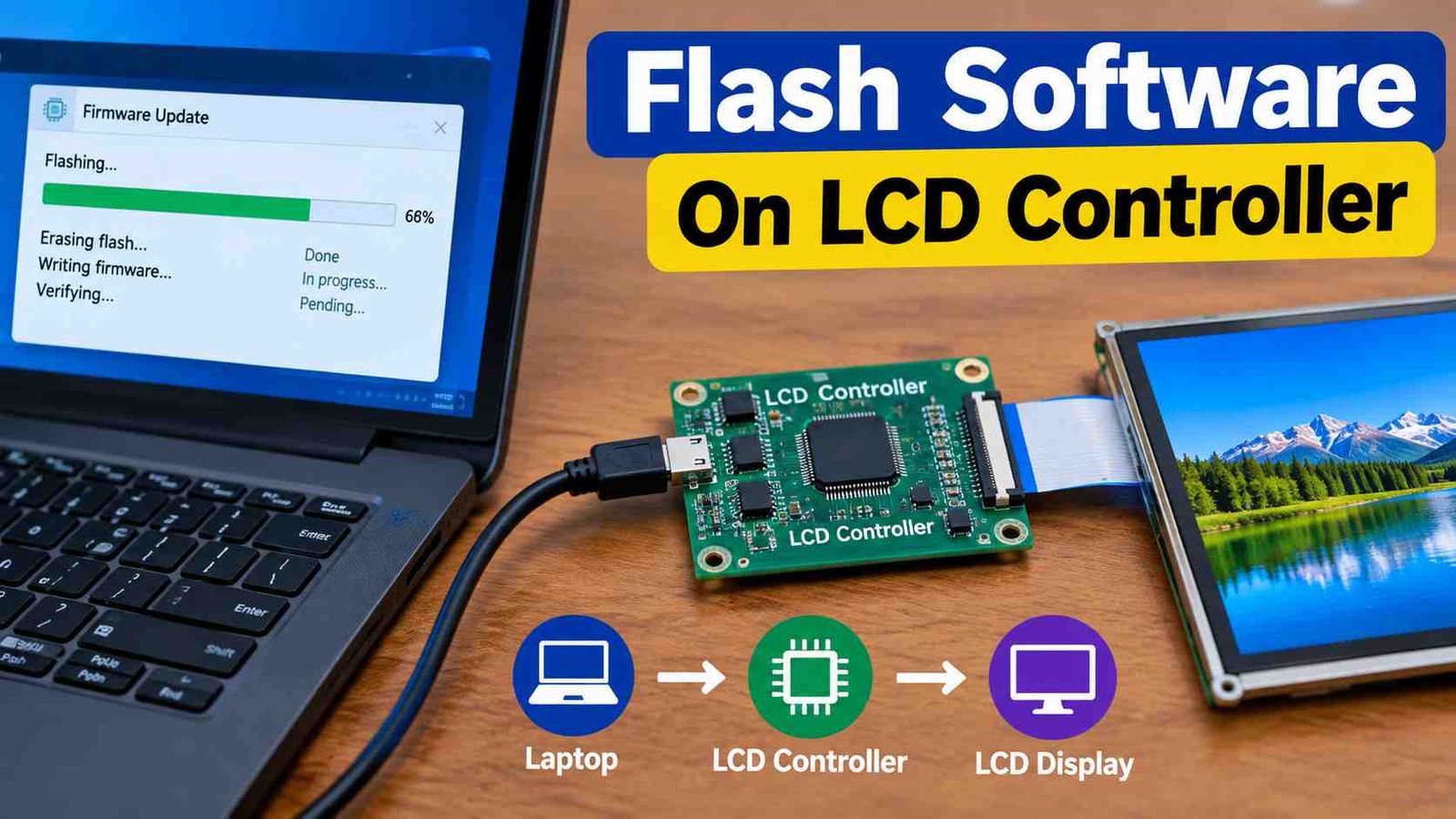
Embedded Linux is another common outsourcing area. Specialists can customize kernels, develop board support packages, create drivers, and build applications for embedded devices. For connected products, an outsourcing partner may also handle IoT firmware, wireless connectivity, cloud communication, remote monitoring, edge computing, and over-the-air updates.
Testing and maintenance should not be overlooked. Outsourced teams can perform unit, integration, system, regression, performance, reliability, security, and hardware-in-the-loop testing. After launch, they can provide bug fixes, firmware updates, security patches, performance improvements, and legacy-system modernization.This flexibility means companies do not necessarily need to outsource their complete product. They can select the services where external expertise creates the greatest value.
Why Do Companies Choose Embedded Software Outsourcing?
One of the biggest reasons businesses choose Embedded Software Outsourcing is access to specialized engineering talent. Experienced embedded developers may have knowledge of C and C++, Assembly, RTOS platforms, embedded Linux, device drivers, microcontrollers, communication protocols, and debugging tools. Building all of these skills internally can take considerable time, especially when the project requires a niche technical skill.
Cost and flexibility are also important. Hiring a permanent engineering team means paying for recruitment, salaries, benefits, training, equipment, and other overhead. Outsourcing can allow a company to bring in the expertise it needs without creating a large permanent department. A team can also be expanded during intensive development stages and reduced after major milestones are completed.
Speed is another advantage. Starting with an experienced external team may reduce the time required to recruit and train engineers. This can be particularly useful for startups and businesses working toward a demanding product launch.
Outsourcing can also allow internal employees to focus on product strategy, hardware, customer requirements, or other core activities. At the same time, external specialists handle technically demanding software work. The supplied outline identifies specialized talent, cost control, faster time to market, scalability, business focus, quality, and access to newer technologies as major reasons for outsourcing.However, these benefits depend heavily on choosing the right partner and establishing clear responsibilities.
Also Read: What Is Cartonization Software? Benefits, Features & Uses
In-House vs. Embedded Software Outsourcing: Which Is Better?
There is no universal answer to whether a company should develop embedded software internally or outsource it. The right choice depends on the project’s complexity, timeline, internal capabilities, long-term strategy, and the importance of embedded engineering to the business.
An in-house team can be a strong choice when embedded software is a permanent core competency. Internal engineers build deep knowledge of the product and can work closely with hardware, product, and management teams. Companies may also prefer this approach when they need maximum control over architecture, intellectual property, and long-term development.
Outsourcing can be more attractive when a company lacks specialized engineers, needs to accelerate development, is launching a new hardware platform, or requires expertise that is not needed permanently. It can also help businesses scale without committing to long-term hiring.
A hybrid model can offer a middle ground. In this arrangement, the internal team retains product ownership, architecture, and critical knowledge while an external team handles specialized development, testing, integration, or maintenance. The supplied outline specifically identifies this approach as useful when the internal team manages architecture and product ownership while external engineers provide specialized development capacity.
| Factor | In-House Development | Outsourcing | Hybrid Model |
| Specialized talent | Must build internally | Available from partner | Shared |
| Team scalability | Slower | Faster | Flexible |
| Product knowledge | Strong internal knowledge | Requires transfer | Strong internal ownership |
| Initial hiring pressure | Higher | Lower | Moderate |
| Control | High | Depends on agreement | High |
| Best for | Long-term core capability | Specialized or urgent projects | Complex long-term products |
The best decision is therefore based on capability and business needs, not simply hourly development rates.
How Does the Embedded Software Outsourcing Process Work?
A successful project normally begins with clear requirements. Before approaching vendors, a company should document its product goals, hardware platform, processor or microcontroller, operating system, required features, connectivity, performance expectations, power limitations, security requirements, timeline, budget, and expected deliverables. Clear requirements reduce misunderstandings later in the project.
The next step is deciding what should actually be outsourced. A company might need a partner for complete development, or it may only require firmware, drivers, RTOS work, embedded Linux, testing, security, integration, or maintenance.
After defining the scope, research potential providers based on relevant technical experience, portfolio quality, testing capabilities, security practices, and client references. Do not evaluate a company only by its general software experience. Ask whether its engineers have worked with similar hardware, processors, operating systems, and communication technologies.
Once a partner is selected, both sides should agree on responsibilities, communication channels, project milestones, documentation standards, acceptance criteria, and escalation procedures. Development can then move through architecture, coding, hardware bring-up, driver implementation, integration, testing, and optimization.
Testing should occur throughout the project rather than being left until the final stage. After release, the relationship may continue through firmware updates, bug fixes, security patches, performance improvements, and technical support. This complete lifecycle approach is included in the supplied outline’s ten-stage outsourcing process.
How Much Does Embedded Software Outsourcing Cost?
There is no single price for Embedded Software Outsourcing because every project has different technical and business requirements. A simple firmware project for an established hardware platform may require far less engineering effort than a complex safety-critical device involving custom drivers, real-time processing, extensive testing, security controls, and regulatory requirements.
Project complexity is one of the most important cost factors. Other factors include the number and experience of engineers, hardware platform, software architecture, operating system, development timeline, testing requirements, security needs, geographic location, engagement model, and post-launch maintenance.
The location of the outsourcing team can also influence rates. Onshore teams may offer easier communication and greater time-zone overlap but can have higher labor costs. Nearshore providers may balance cost and collaboration, while offshore teams can provide access to larger talent pools and potentially lower development rates.
However, businesses should not select a provider based only on the cheapest hourly rate. A low rate can become expensive if the team creates defects, requires excessive supervision, misses deadlines, or lacks the necessary hardware knowledge. Rework, communication overhead, project delays, and technical risk can increase the actual cost of development.
A more useful approach is to calculate the total project cost, including discovery, architecture, development, integration, testing, security, deployment, and maintenance. This provides a more realistic basis for comparing outsourcing proposals.
How to Choose the Right Embedded Software Outsourcing Company?
Choosing a reliable partner is one of the most important decisions in an outsourced embedded project. Start by examining technical expertise. The provider should understand the hardware, processor, microcontroller, operating system, programming languages, communication protocols, and development tools relevant to your product.
Industry experience is also valuable. A team that has worked on automotive, medical, industrial, IoT, robotics, or consumer electronics products may already understand challenges that a general software company has never encountered. Ask for relevant case studies rather than accepting broad claims about experience.
The development process should also be examined. Ask how the company manages source control, code reviews, automated testing, documentation, releases, and technical changes. Strong quality assurance is particularly important because embedded defects can affect physical products.
Security and intellectual property deserve equal attention. Before sharing proprietary designs or source code, establish clear contractual terms covering confidentiality, ownership, access control, deliverables, and source-code rights. The supplied outline also recommends evaluating team stability, knowledge documentation, continuity planning, communication, and post-launch support.
Finally, consider communication. A technically strong team can still struggle if requirements are misunderstood or progress is difficult to track. Define meeting schedules, reporting methods, response expectations and escalation procedures before development begins.
Challenges and Risks of Embedded Software Outsourcing
Outsourcing can bring major advantages, but it also introduces risks that need active management. Communication gaps are among the most common. Time-zone differences, unclear requirements, language issues, or weak technical documentation can lead to misunderstandings that become expensive during integration.
Knowledge transfer is another important concern. Embedded products often contain hardware-specific details that may not be obvious from the source code alone. If important knowledge remains only with an external engineer, replacing that person or changing vendors can become difficult.
Intellectual property must also be protected. Embedded projects can involve source code, firmware, schematics, algorithms, hardware specifications, and confidential product documentation. Contracts should clearly define who owns the work and how information can be accessed.
Quality is another risk. Poor coding practices, inadequate testing, weak documentation, and insufficient hardware integration can create problems late in development. Vendor dependency can make the situation worse if a company has no internal understanding of its own critical software.
These risks can be reduced through detailed requirements, strong documentation, clear ownership, NDAs and contracts, regular technical meetings, code reviews, automated testing, and knowledge-transfer processes. The supplied outline emphasizes communication, knowledge transfer, quality, IP protection, project management, vendor dependency and engineer turnover as key outsourcing risks.
Security and Quality Assurance in Embedded Software Outsourcing
Security should be considered from the beginning of an embedded project rather than added shortly before launch. A vulnerable firmware image, insecure boot process, weak authentication, exposed debugging interface, or unsafe update mechanism can create serious problems after a product reaches customers.
A capable outsourcing partner should understand secure coding, secure boot, firmware signing, encryption, authentication, vulnerability management, access controls, security testing, and secure over-the-air updates. Intellectual property protection is equally important, especially when external engineers receive access to source code, product designs, schematics, or technical documentation.
Quality assurance also needs to account for the physical nature of embedded systems. Software interacts with hardware, and failures may depend on timing, memory limitations, power conditions, or particular hardware states. Testing should therefore cover unit, integration, system, regression, performance, stress, security, reliability, and hardware-in-the-loop scenarios.
Automated testing and continuous integration can make this process more efficient by identifying defects earlier and reducing the chance that a new software change breaks an existing function. A strong outsourcing partner should be able to explain not only how it writes code, but also how it proves that the code works reliably on the target hardware.
Embedded Software Outsourcing Best Practices
The most successful outsourcing relationships begin with realistic expectations and clear ownership. Requirements should be documented before development starts, and both parties should agree on what constitutes an acceptable deliverable. This is particularly important when software interacts with custom hardware.
Choose a partner based on relevant expertise rather than price alone. If the product uses a specific microcontroller, RTOS, processor architecture, or communication protocol, look for evidence that the team has worked with those technologies before. A small proof of concept can also be useful when technical compatibility is uncertain.
Code reviews, version control, automated testing, and clear documentation should be part of the development process. Hardware and software interfaces should be documented carefully so that knowledge does not remain with a single engineer.
Regular communication is equally important. Teams should track milestones, defects, test coverage, schedule adherence, rework, and other meaningful performance indicators. These measures provide a clearer picture of project health than simply counting completed tasks.
Finally, plan for the full product lifecycle. Embedded products can remain in the field for years, making firmware updates, security patches, bug fixes, and maintenance important after the initial release. The outsourcing agreement should therefore address long-term support and knowledge continuity, not only initial development.
Frequently Asked Questions
1. Can a company outsource only part of an embedded software project?
Yes. A company does not have to outsource the complete product. It can outsource firmware, device drivers, embedded Linux, RTOS development, testing, security, integration, or maintenance while keeping architecture and product ownership internally.
2. What should I provide to an outsourcing partner before development starts?
Provide as much relevant technical information as possible, including hardware specifications, processor or microcontroller details, software requirements, interfaces, performance expectations, security requirements, timelines, and acceptance criteria. Better documentation generally makes project planning more reliable.
3. Is offshore Embedded Software Outsourcing suitable for complex products?
It can be, provided the partner has the required technical expertise and the project has strong communication, security, documentation, and management processes. Location alone does not determine whether an outsourcing relationship will succeed.
4. Should I outsource embedded software development for a startup?
Outsourcing can be useful for startups that need specialized engineers but do not want to build a large permanent team immediately. It can provide development capacity while the startup focuses on product strategy, hardware, customers, and business growth.
5. What is the biggest mistake when choosing an embedded outsourcing partner?
Choosing a provider mainly because it offers the lowest price is a common mistake. Hardware experience, technical capability, testing, security, communication, team stability, IP protection, and long-term support can have a much greater effect on the project’s final cost and success.
Conclusion
Embedded Software Outsourcing can help businesses access specialized engineering skills, control development costs, accelerate product launches, and scale teams more easily. However, successful outsourcing requires more than finding developers. Embedded products depend on close cooperation between hardware and software, making technical expertise, testing, security, documentation, and communication especially important.Before selecting a partner, evaluate its experience with your hardware and software environment, development process, quality practices, security controls, communication approach and long-term support. Consider the total project cost rather than simply comparing hourly rates. For many organizations, a hybrid approach can provide a practical balance between internal product ownership and external engineering expertise.