Introduction
Running a successful gutter business requires more than excellent installation skills. Contractors also need to create accurate estimates, calculate materials, price labor correctly, and send professional proposals quickly. This is where gutter estimate software becomes an essential business tool.
Traditional estimating often relies on paper measurements, spreadsheets, calculators, and manual pricing. While these methods can work, they increase the risk of calculation mistakes, forgotten materials, inconsistent pricing, and slow customer response times. Modern estimating software solves these problems by turning property measurements into detailed quotes within minutes.
Whether you install seamless gutters, replace damaged systems, or offer gutter guards and downspouts, the right software helps improve accuracy and save valuable time. It also allows contractors to manage customer information, schedule jobs, and track profitability from one place.
In this complete guide, you’ll learn what gutter estimate software is, how it works, its most important features, pricing models, and how to choose the best solution for your business.
What Is Gutter Estimate Software?
Gutter estimate software is a digital tool designed to help gutter contractors create accurate project estimates for residential and commercial properties. Instead of calculating every material and labor cost manually, the software automates much of the estimating process and produces professional customer proposals.
The software is built specifically for gutter installation businesses. It calculates linear feet of gutters, determines the number of downspouts, includes corners and accessories, and applies custom pricing rules based on your business. Many platforms also allow contractors to save reusable estimate templates, making future quotes much faster.
Unlike a simple gutter calculator, complete estimating software includes customer management, proposal generation, scheduling, invoicing, and reporting features. This means an estimate can move smoothly from the sales stage to installation and final payment without entering the same information multiple times.
It is useful for businesses of every size, including independent gutter installers, seamless gutter companies, roofing contractors that offer gutter services, exterior remodeling companies, and larger contractors managing multiple installation crews. By standardizing estimates, companies can reduce pricing errors and deliver a more professional experience to every customer.
How Does Gutter Estimate Software Work?
The estimating process usually begins by collecting basic customer and property information. Contractors enter the customer’s name, address, project type, preferred gutter style, material, color, and any additional products such as leaf guards or splash blocks. This information becomes the foundation of the estimate.
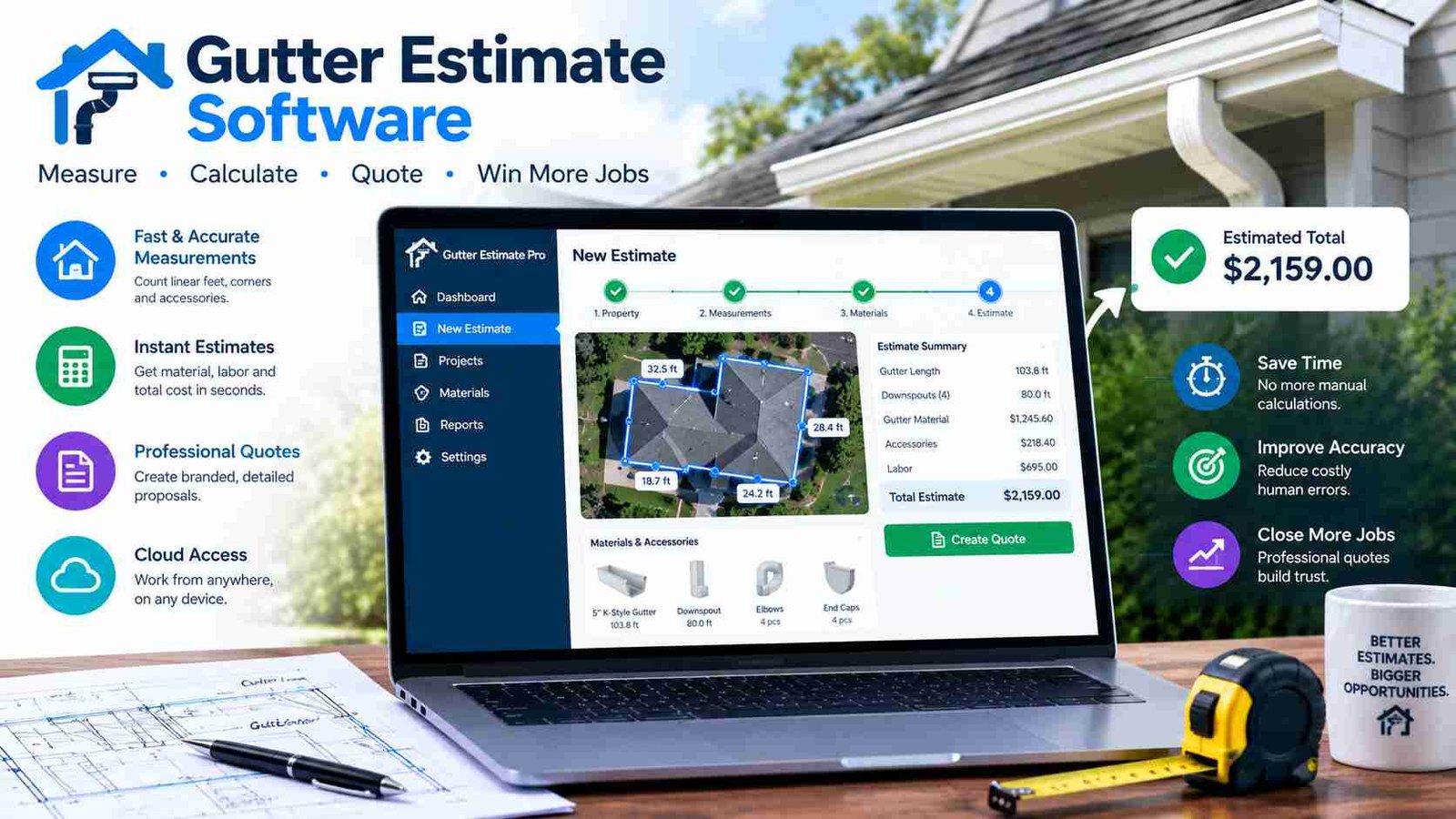
Next comes the measurement stage. Contractors can manually enter measurements taken on-site or use satellite imagery and digital roofline tracing when supported. The software records gutter runs, linear feet, downspout locations, inside and outside corners, end caps, elbows, and other accessories required for the installation.
Once measurements are complete, the software automatically converts them into material quantities. Instead of counting every component by hand, it calculates gutter footage, hangers, miters, downspouts, elbows, and protective accessories based on the project layout. This reduces the chance of missing important materials during ordering.
The final step is pricing and proposal creation. Contractors apply labor rates, material costs, markups, minimum service charges, and optional upgrades. Within minutes, the software generates a professional estimate that includes itemized pricing, scope of work, company branding, and digital approval options. Many systems even allow customers to accept the quote electronically, helping businesses close jobs faster.
Key Features of Gutter Estimate Software
The value of gutter estimate software comes from combining multiple business functions into one platform. Rather than using separate tools for estimating, customer management, scheduling, and invoicing, contractors can manage the complete workflow in one place.
A strong feature is accurate gutter measurement and material takeoff. The software calculates linear feet, roofline dimensions, gutter runs, corners, downspouts, and accessories automatically. This creates more consistent material lists and reduces costly ordering mistakes.
Professional pricing tools are equally important. Contractors can build custom price books with different labor rates, material costs, package options, and profit margins. This ensures every salesperson follows the same pricing structure, protecting company profitability even as material prices change.
Customer relationship management features help organize leads, estimate history, follow-up reminders, and communication records. Instead of searching through emails or spreadsheets, contractors can instantly access previous quotes and customer details.
Mobile functionality allows estimates to be created directly from a phone or tablet while visiting a property. Sales representatives can capture photos, save measurements, and email a branded proposal before leaving the customer’s driveway. This immediate response often creates a better customer experience and increases the chances of winning the project.
How Accurate Gutter Estimating Works?
Accurate estimating depends on much more than measuring the roof edge. A professional gutter quote includes materials, accessories, labor complexity, installation conditions, and potential waste. Good estimating software helps contractors consider all of these factors consistently.
Linear-foot measurement is the starting point. Every gutter run must be measured correctly, including straight sections and connected rooflines. Missing only a few feet can significantly affect material orders and project pricing. Digital measurement tools help reduce human error while improving consistency between different estimators.
Downspout calculations are another important part of accuracy. The software considers the number of stories, drainage requirements, elbow offsets, and placement around the building. Complex homes often require additional fittings that manual estimates may overlook.
Labor calculations are equally valuable. A two-story house with difficult access requires more installation time than a simple single-story property. Estimating software allows contractors to apply different labor rates based on building height, roof complexity, removal of old gutters, fascia repairs, or special equipment such as ladders and lifts.
Finally, experienced contractors include waste and contingency allowances. Small material waste, unexpected repairs, and replacement components can affect project costs. Including these factors creates more realistic estimates while protecting healthy profit margins.
Benefits of Using Gutter Estimate Software
The biggest advantage of using gutter estimate software is efficiency. Contractors who previously spent an hour creating estimates can often complete the same task in a fraction of the time. Faster estimates allow businesses to quote more jobs without increasing office workload.
Accuracy is another major benefit. Automated calculations reduce mathematical mistakes and ensure important materials such as miters, end caps, elbows, and hangers are included consistently. This helps prevent unexpected expenses during installation.
Professional presentation also improves customer confidence. Clean, branded proposals with detailed pricing and clear project descriptions look far more trustworthy than handwritten quotes or basic spreadsheets. Customers appreciate receiving organized documents they can easily review and approve.
The software also improves internal communication. Sales teams collect measurements and specifications that installers can access immediately. Crews arrive with accurate material lists and complete job information, reducing phone calls and confusion between departments.
From a financial perspective, standardized pricing protects profitability. Every estimator follows the same labor rates, markup percentages, and package pricing. Managers can compare estimated costs with actual job expenses, helping identify areas where profits can improve. As businesses grow, this consistency becomes even more valuable because every team member follows the same estimating process.
Gutter Estimate Software vs Manual Estimating
Choosing between manual estimating and digital software often depends on business goals. While manual methods may seem inexpensive initially, software offers greater consistency and long-term efficiency.
| Feature | Manual Estimating | Gutter Estimate Software |
| Measurements | Handwritten | Digital & automated |
| Material calculations | Manual | Automatic takeoffs |
| Pricing | Calculator/Excel | Custom price books |
| Customer proposals | Basic documents | Branded professional quotes |
| Approvals | Paper signatures | Digital acceptance |
| Job scheduling | Separate process | Integrated workflow |
| Customer records | Multiple files | Centralized database |
| Profit tracking | Difficult | Built-in reporting |
For growing gutter companies, software reduces repetitive administrative work while creating a more organized sales process.
How to Choose the Right Gutter Estimate Software?
Not every estimating platform is designed specifically for gutter contractors. Before purchasing software, evaluate how well it matches your daily workflow rather than choosing based only on price.
Business size is the first consideration. Solo contractors may need affordable mobile estimating and simple proposal tools, while larger companies benefit from crew scheduling, user permissions, reporting, and multiple estimator accounts. Buying unnecessary enterprise features can increase costs without adding real value.
Gutter-specific functionality is equally important. The software should accurately calculate linear feet, downspouts, miters, elbows, end caps, hangers, and leaf protection products. Generic construction estimating tools may require manual adjustments that reduce efficiency.
Testing the measurement process is another smart step. Create a quote using a real completed project and compare the software’s material calculations with your previous estimate. This practical test reveals whether measurements, pricing, and proposal generation fit your business needs.
Finally, review pricing carefully. Some platforms charge monthly subscriptions, while others price by users or available features. Compare the software cost against the time saved, improved estimate accuracy, and additional jobs you expect to close each month. The best value comes from improving profitability rather than simply finding the cheapest option.
Pricing and Future Trends in Gutter Estimating
The cost of gutter estimate software varies depending on features, business size, and subscription model. Entry-level solutions may offer basic estimating and proposal tools, while premium platforms include CRM, scheduling, invoicing, aerial measurements, reporting, and accounting integrations. Many providers also offer free trials so contractors can evaluate the workflow before subscribing.When comparing pricing, consider the total return on investment instead of the monthly fee alone. If the software helps create faster estimates, reduce pricing mistakes, and increase sales conversions, it can easily pay for itself through improved productivity and higher profits.
The future of gutter estimating is becoming increasingly digital. Mobile-first estimating allows contractors to complete quotes directly on-site using smartphones or tablets. Satellite and aerial measurement technology continues to improve, making roofline calculations faster and safer without climbing ladders. Artificial intelligence is also beginning to assist with automatic material takeoffs, smarter pricing suggestions, and customer follow-up reminders.
As these technologies become more accessible, contractors who adopt modern estimating tools will likely enjoy faster workflows, better customer service, and stronger business growth while maintaining accurate and professional estimates.
Frequently Asked Questions
1. Can gutter estimate software work offline?
Some platforms include offline mobile mode, allowing contractors to collect measurements and customer information without internet access. The data usually syncs automatically once the device reconnects.
2. Is gutter estimate software suitable for commercial projects?
Yes. Many systems support both residential and commercial properties by handling larger rooflines, multiple buildings, complex drainage layouts, and customized pricing structures.
3. Can I customize my company’s branding on estimates?
Most professional estimating software allows you to add your logo, business details, license information, colors, and personalized proposal templates for a professional appearance.
4. Does gutter estimate software help with repeat customers?
Yes. Customer records are stored in the database, making it easy to access previous estimates, property details, installation history, and future maintenance opportunities.
5. How long does it take to learn gutter estimate software?
For most contractors, the basic estimating workflow can be learned within a few days. Advanced features such as reporting, CRM, and automation may require additional practice but usually become easier with regular use.
Conclusion
Gutter estimate software helps contractors create faster, more accurate, and more professional estimates while reducing manual calculations and administrative work. From measuring linear feet and calculating materials to generating branded proposals and managing customer records, the software simplifies the entire sales process.
Whether you operate as an independent installer or manage multiple crews, choosing a solution that matches your workflow can improve efficiency, protect profit margins, and enhance the customer experience. Testing the software with real projects before purchasing is the best way to find the right fit for your business and support long-term growth.