Introduction
The theater ticket software market has changed the way theaters sell tickets and manage audiences. Instead of using paper tickets, handwritten seat charts, and manual cash registers, modern venues now use digital systems that handle everything from online booking to entry scanning.
For theater owners and event managers, digital ticketing means fewer errors, faster customer service, and better control over revenue. Customers also enjoy a smoother experience because they can choose their seats online, receive instant confirmations, and enter the venue using a QR code on their phone.
Unlike general event ticketing platforms, theater ticket software is designed specifically for performances with reserved seating, season passes, memberships, and box office operations. Whether you manage a community theater, a performing arts center, a school auditorium, or a nonprofit venue, the right system can simplify daily operations while improving audience satisfaction.
In this guide, you’ll learn how theater ticket software works, its essential features, pricing models, different types of systems, and how to choose the best solution for your venue.
What Is Theater Ticket Software?
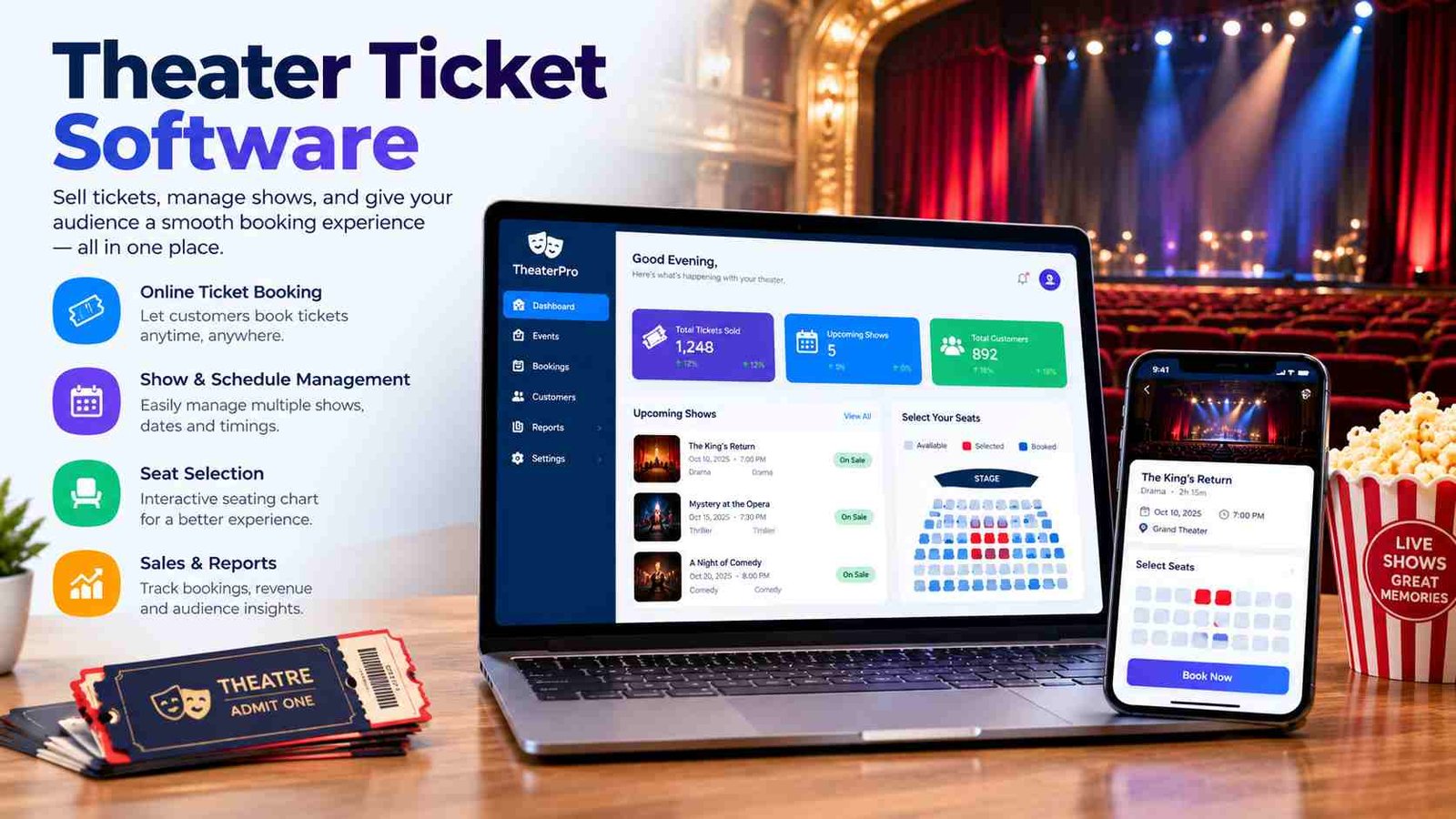
Theater ticket software is a digital platform that helps theaters create performances, sell tickets, manage seating, process payments, and track attendance from one centralized system. It replaces traditional paper-based ticketing with an automated workflow that saves time and reduces mistakes.
A typical system manages the complete ticket sales journey. Staff members create an event, upload a seating layout, set ticket prices, and publish the performance online. Customers can then purchase tickets either through the theater’s website or directly at the physical box office. Once payment is complete, the software generates a digital ticket with a QR code or barcode.
One of the biggest advantages is its support for reserved seating. Unlike general admission events where guests choose any available seat, theater software allows visitors to select specific seats such as orchestra, balcony, or VIP sections. This improves customer satisfaction while preventing double bookings.
These platforms are widely used by community theaters, professional performing arts centers, universities, nonprofit organizations, cinemas, dance companies, musical theaters, and cultural venues. Whether a venue has 100 seats or several thousand, theater ticket software helps organize ticketing efficiently while creating a better experience for both staff and audiences.
How Theater Ticket Software Works?
Theater ticket software follows a simple but powerful workflow that connects ticket sales, audience management, and reporting into one process.The first step is creating a performance. Staff enter the show’s title, dates, times, venue, and ticket availability. Next, the seating layout is designed by mapping orchestra, balcony, accessible seating, and premium sections. Custom seating charts help customers visualize exactly where they will sit.
After the layout is complete, administrators create pricing categories such as adult, student, senior, VIP, or group discounts. Many theaters also schedule promotional offers for early bookings or special performances.
Once published, tickets become available online and at the box office. Customers select their preferred seats, complete secure payment, and instantly receive digital tickets by email or mobile wallet. On performance day, staff scan QR codes at the entrance, allowing quick admission while preventing duplicate ticket use.
After the event, the software automatically records attendance, calculates occupancy rates, tracks revenue, and generates detailed reports. Managers can see which performances sold best, identify popular seating areas, and use sales data to improve future marketing campaigns and scheduling decisions.
Essential Features of Theater Ticket Software
The value of theater ticket software comes from its collection of tools that support both customers and venue staff. Rather than using separate programs for ticketing, payments, and customer records, everything works together in one platform.
Online Ticket Sales
Modern audiences expect to buy tickets anytime using a phone, tablet, or computer. Theater software integrates directly with a venue’s website, allowing visitors to browse performances, choose seats, and receive instant booking confirmation. Mobile-friendly design ensures the buying process remains simple even for last-minute purchases.
Interactive Seating Maps
Interactive seat maps let customers visually choose available seats. They display orchestra, balcony, box seats, and accessible seating in real time. As seats are sold, availability updates immediately, reducing booking conflicts and improving transparency.
Box Office Management
A strong box office module supports walk-in sales, ticket exchanges, refunds, complimentary tickets, ticket holds, and multiple payment methods including cash and cards. Staff can quickly assist customers without manually updating spreadsheets.
Mobile Ticket Scanning
Digital QR codes and barcodes make audience entry much faster than paper tickets. Each ticket is validated instantly, reducing waiting lines while preventing fraud through duplicate scans.
Customer and Patron CRM
Built-in customer relationship management helps theaters store patron profiles, purchase history, membership information, donation records, and loyalty rewards. This allows personalized marketing and stronger long-term audience relationships.
Reporting and Analytics
Managers receive detailed reports showing ticket sales, occupancy percentages, revenue by performance, best-selling productions, and marketing results. These insights help improve pricing strategies and future programming decisions.
Types of Theater Ticket Software
Different venues require different ticketing solutions. The best choice depends on venue size, technical resources, and business goals.
Cloud-Based Theater Ticket Software
Cloud-based systems are the most popular option because they require no local servers. Staff can access the platform from any internet-connected device, automatic updates are included, and backups happen securely in the background. They are ideal for small and medium-sized theaters that want flexibility with minimal IT maintenance.
On-Premise Ticketing Systems
Larger organizations sometimes choose on-premise software installed on their own servers. This provides greater control over customization, security policies, and internal infrastructure. Enterprise venues with dedicated IT departments often prefer this model.
All-in-One Performing Arts Platforms
These platforms combine ticketing with memberships, fundraising, donor management, subscriptions, volunteer coordination, and customer communication. Nonprofit performing arts organizations often benefit from having every audience relationship managed in one place.
Box Office-Only Solutions
Smaller community theaters may only need a simple system for selling tickets, printing receipts, and managing reserved seating. These affordable solutions focus on everyday box office operations without advanced fundraising features.
Benefits of Using Theater Ticket Software
Investing in theater ticket software delivers benefits beyond simply selling tickets. It improves efficiency, increases revenue opportunities, and creates a better experience for audiences.Faster ticket sales begin with online booking. Customers no longer need to call the box office during business hours, and automated confirmations reduce staff workload. Reserved seating also eliminates confusion by allowing guests to select exact seats before arriving.
Manual mistakes become much less common. Real-time availability prevents double bookings, while automated payment processing reduces accounting errors. Refunds and ticket exchanges are recorded digitally, making financial tracking much more accurate.
Customer relationships also become stronger. By storing patron history, theaters can promote upcoming productions based on previous attendance, encourage memberships, and reward loyal visitors with special offers. Personalized communication often leads to higher repeat attendance.
Analytics provide another major advantage. Instead of guessing which productions perform best, managers can measure occupancy, revenue, pricing performance, and customer behavior. This data supports smarter scheduling, better marketing campaigns, and more profitable programming decisions over time.
Theater Ticket Software vs General Event Ticketing Software
Although both systems sell tickets online, theater ticket software includes specialized tools designed specifically for performing arts venues.
| Feature | Theater Ticket Software | Generic Event Software |
| Reserved seating | Yes | Sometimes |
| Interactive seat maps | Yes | Limited |
| Season subscriptions | Yes | Rare |
| Box office tools | Advanced | Basic |
| Ticket exchanges | Yes | Limited |
| Patron CRM | Included | Optional |
Theater-specific platforms are generally better suited for venues with assigned seating, recurring performances, memberships, and audience relationship management.
Who Should Use Theater Ticket Software?
Theater ticket software serves many different organizations across the performing arts industry. Community theaters benefit from affordable ticketing and volunteer-friendly interfaces that simplify weekend performances. Professional performing arts venues often need advanced seating maps, subscription management, and detailed reporting for hundreds of performances each year.
Schools and universities use these systems for student productions, concerts, and graduation events, allowing parents and visitors to reserve seats online. Nonprofit arts organizations gain additional value through donor management and membership tracking, making fundraising easier alongside ticket sales.
Dance companies, opera houses, musical theaters, and cultural centers also rely on reserved seating and audience analytics to maximize attendance. Even smaller venues with limited staff can improve customer service by replacing paper tickets with automated digital workflows.
How to Choose the Best Theater Ticket Software?
Choosing the right software begins with understanding your venue’s operational needs rather than selecting the platform with the most features.
Seating flexibility should be a top priority. Look for customizable seating charts, support for multiple venues, and accessible ADA seating options that accurately represent your auditorium.
Ease of use is equally important. Staff members and volunteers should be able to learn the system quickly, while customers should complete bookings without confusion. A complicated checkout process can reduce ticket sales.Pricing structure deserves careful attention. Some providers charge monthly subscriptions, others charge per-ticket fees, and some offer flat-rate plans. Always review processing fees, setup costs, and any hidden charges before making a decision.
Integrations make daily operations smoother. Payment gateways, accounting software, email marketing platforms, CRM tools, and website builders should connect easily with your ticketing system.
Finally, choose software that follows PCI compliance and strong data security standards. Protecting customer payment information is essential for maintaining trust and meeting industry regulations.
Best Theater Ticket Software Solutions
Several well-known platforms serve different types of theaters. The best choice depends on your venue size, budget, and operational requirements rather than one universal winner.
| Software | Best For | Key Strength |
| ThunderTix | Performing arts venues | Reserved seating tools |
| TicketSource | Small theaters | Easy setup and affordability |
| Spektrix | Arts organizations | CRM and memberships |
| AudienceView | Large venues | Enterprise ticketing |
| Tessitura | Nonprofits | Patron management |
| Eventbrite | Small events | Simple online sales |
Smaller theaters often prioritize simplicity and low operating costs, while larger performing arts centers usually require advanced CRM, subscriptions, donor management, and detailed reporting.
Common Challenges Theater Ticket Software Solves
Without digital ticketing, theaters frequently experience operational problems that affect both revenue and customer satisfaction. One common issue is double-booked seats, which can lead to unhappy guests and stressful box office situations. Real-time seat availability eliminates this risk.
Long queues at the entrance are another challenge. QR code scanning speeds up admission and reduces waiting times during busy performances. Lost paper tickets also become less problematic because customers can easily access digital copies through email or mobile devices.
Manual refund processing often creates accounting confusion, but theater ticket software records every transaction automatically. Attendance tracking also becomes much more reliable because scanned tickets show exactly how many guests entered the venue.
Finally, revenue reporting becomes clearer. Instead of combining information from spreadsheets and cash registers, managers receive accurate financial reports that support better business planning and performance analysis.
Future Trends in Theater Ticket Software
The future of theater ticket software focuses on personalization, automation, and smarter business decisions. Artificial intelligence is beginning to help venues forecast ticket demand by analyzing previous sales, seasonal trends, and customer behavior. This allows theaters to plan marketing campaigns more effectively.
Dynamic pricing is another growing trend. Instead of fixed ticket prices, software can adjust prices based on demand, remaining seat availability, or performance popularity. This helps maximize revenue while keeping less popular shows competitive.
Mobile wallets and contactless entry continue to improve convenience by reducing printed tickets and speeding audience admission. Self-service kiosks are also becoming popular in larger venues, allowing guests to print tickets or manage bookings without waiting for staff assistance.
Real-time occupancy dashboards give managers immediate visibility into ticket sales across multiple performances, while personalized email marketing helps theaters recommend productions that match each patron’s interests. These innovations make theater operations more efficient and audience experiences more engaging.
Frequently Asked Questions
1. What is theater ticket software used for?
Theater ticket software helps venues manage performances, sell tickets online and at the box office, assign seats, process payments, and track attendance from one platform.
2. Can theater ticket software manage season subscriptions?
Yes. Many theater-focused platforms support season passes, membership packages, recurring subscribers, and flexible ticket exchanges for loyal patrons.
3. Is cloud-based theater ticket software better than desktop software?
Cloud-based solutions are usually easier to maintain because they offer automatic updates, remote access, and secure backups. Desktop systems may suit organizations that need greater internal control.
4. Does theater ticket software support QR code tickets?
Yes. Most modern systems generate QR codes or barcodes that staff can scan quickly for secure and contactless audience entry.
5. What should small theaters look for before buying software?
Small venues should prioritize easy setup, affordable pricing, customizable seating maps, secure payment processing, and responsive customer support rather than unnecessary enterprise features.
Conclusion
The right theater ticket software does much more than sell tickets. It improves reserved seating, simplifies box office operations, strengthens customer relationships, and provides valuable sales insights that support better business decisions. Whether you manage a small community theater or a large performing arts venue, choosing software with flexible seating, secure payments, CRM features, and detailed reporting will create a smoother experience for both staff and audiences. By investing in a solution that matches your venue’s size and operational needs, you can increase efficiency, reduce manual work, and deliver a professional ticketing experience that keeps patrons coming back.